admin
adminExclusive: Italy proposes no fees for digital euro payments under €10
Italy suggests exempting smaller merchant fees for payments under €10, a measure backed by the central banking community, as final talks take place in Brussels over the rollout of the digital euro.
Italy has proposed introducing an exemption for digital euro transactions under €10 in a move that would favour small businesses, according to sources consulted and documents seen by Euronews
The move is viewed favourably by the central banking community, in particular by the European Central Bank (ECB), a source from the banking sector told Euronews.
The digital euro is a digital form of payment, expected to complement cash, with the ECB aiming to be ready for a potential first issuance in 2029, assuming the necessary regulation is adopted this year.
As Europe mainly relies on US-based payment schemes such as Visa and Mastercard, the EU is pushing for greater strategic autonomy in payments, with the digital euro seen as one potential solution.
It will have legal tender status, meaning merchants will generally be required to accept it, subject to certain exceptions. For this reason, legislators are negotiating how fees should be distributed among market participants, so that small merchants are not disadvantaged by the adoption of the new digital currency.
The distribution of fees among market participants, known as the “compensation model”, is among the most delicate parts of the negotiations in Brussels, alongside the “holding limits”, meaning the maximum amount of digital euro that can be held in a wallet.
“The proposal is a merchant service charge cap up to €0.02 for low value transactions, applicable especially to small merchants. But we’re open to consider a net zero, as de facto this would be the result anyway,” an EU diplomat told Euronews on condition of anonymity.
“Such a solution would also make the framework simpler,” the diplomat added.
According to internal documents seen by Euronews in relation to the negotiations, the fee scheme will be temporary, allowing the ECB to gather sufficient data before proposing a new model, if appropriate. The need for better data on payment fees has also been highlighted by the European Court of Auditors. In a 2025 report, the ECA found that the European Commission lacked sufficient data on merchant service charges and costs to effectively monitor the impact of existing price interventions in the payments market.
Other negotiation documents indicate that small merchants typically pay higher fees than large companies because they have weaker bargaining power with international payment schemes. These schemes are difficult for merchants to refuse, particularly when they are widely used. According to an ECB analysis, small merchants can pay three to four times more in fees than larger merchants.
The matter will be analysed by member states, the European Parliament and the European Commission during the next round of negotiations in Brussels, according to an internal document seen by Euronews.
Negotiators will meet again in Brussels on Thursday, 10 September, for further discussions.
APPROFONDIMENTO
Stiamo studiando, insieme alle banche centrali nazionali dei paesi dell’area dell’euro, la possibilità di introdurre l’euro digitale. Si tratterebbe di una valuta digitale della banca centrale, un equivalente elettronico del contante. Affiancherebbe le banconote e le monete, offrendo ai cittadini una scelta più ampia su come pagare.
L’euro digitale sarebbe una forma digitale di contante, emessa dalla banca centrale e accessibile a chiunque nell’area dell’euro.
L’euro digitale sarebbe una forma digitale di contante, emessa dalla banca centrale e accessibile a chiunque nell’area dell’euro.
Cosa sarebbe l’euro digitale?
L’euro digitale sarebbe una forma digitale di contante: un mezzo di pagamento elettronico al dettaglio emesso da noi, la Banca centrale europea. Pertanto, sarebbe disponibile gratuitamente a tutti nell’area dell’euro, per qualsiasi pagamento digitale. L’euro digitale è pensato per essere inclusivo e facile da usare, senza lasciare indietro nessuno.
Oggi i cittadini non hanno accesso alla moneta emessa dalla banca centrale in forma digitale. In una società sempre più digitalizzata, l’euro digitale rappresenterebbe un’evoluzione naturale della moneta unica.
Contante digitale
Con l’euro digitale potresti effettuare qualsiasi pagamento digitale, come fai con il contante per i pagamenti fisici. Avresti un’opzione in più per pagare nei negozi fisici oppure online, o per inviare denaro ad amici e familiari.
Accettato in tutta Europa
Potresti utilizzare l’euro digitale presso tutti i negozi e gli esercizi dell’area dell’euro che accettano pagamenti digitali.
Gratuito
Chiunque nell’area dell’euro potrebbe effettuare pagamenti in euro digitali gratuitamente, come con le banconote e le monete.
Disponibile offline
Non servirebbe una connessione a Internet. Potresti pagare sempre e ovunque.
Sicuro e privato
La BCE e l’Eurosistema non sarebbero in grado di risalire alla tua identità o ai tuoi acquisti dai dati sui pagamenti. Inoltre, la funzionalità offline dell’euro digitale garantirebbe un livello di privacy paragonabile a quello del contante.
Valore garantito
Un euro sarà sempre un euro. Un euro digitale avrebbe sempre esattamente lo stesso valore di una moneta da un euro.
Inclusivo
L’euro digitale sarà concepito in modo da soddisfare le esigenze di tutti. Attraverso le nostre ricerche sugli utenti ascoltiamo i cittadini europei, raccogliendo dati e informazioni che ci aiuteranno a modellare un euro digitale inclusivo che non lasci indietro nessuno.
Innovativo
Collaboriamo con i settori pubblico e privato per sperimentare nuove idee, sviluppare caratteristiche innovative e fornire soluzioni pratiche per i pagamenti della vita reale. L’euro digitale può offrire ai cittadini una scelta più ampia e maggiore convenienza, contribuendo al successo delle imprese e promuovendo nel contempo l’innovazione in tutta Europa.
Non un’altra criptoattività
L’euro digitale non sarebbe una criptoattività. Le criptoattività sono rischiose e instabili perché non sono garantite né gestite da un’istituzione centrale. Chi detiene criptoattività non ha alcuna garanzia che le potrà cambiare in contante all’occorrenza.
L’euro digitale, invece, sarebbe garantito dalla stessa istituzione che garantisce il tuo contante, cioè da noi, la Banca centrale europea. E proprio come il contante, l’euro digitale manterrebbe sempre il suo valore nominale.
La tua privacy prima di tutto
Stiamo progettando l’euro digitale mettendo al centro la privacy. Solo tu e la tua banca avreste accesso ai dati personali necessari per i pagamenti. La riservatezza delle operazioni sarebbe pari almeno a quella dei pagamenti digitali di oggi, e persino maggiore in modalità offline. I tuoi dati rimarrebbero in Europa e sarebbero tutelati dalle norme e garanzie europee in materia di protezione dei dati.
Sei tu a decidere
L’euro digitale sarebbe un mezzo di pagamento, proprio come le banconote e le monete che hai nel portafoglio: saresti tu a decidere come usarlo. Ti accompagnerebbe nei pagamenti di ogni giorno, lasciandoti sempre la libertà di scegliere come gestire i tuoi soldi.
I pagamenti di base sono gratuiti
Per i consumatori, i pagamenti di base in euro digitali sarebbero gratuiti, proprio come avviene oggi per il contante. Le imprese beneficerebbero di un metodo di pagamento standardizzato in tutta l’UE che favorirebbe concorrenza e innovazione, nonché di commissioni di transazione più basse.
ARTICOLO II
Financial sovereignty, digital euro and payment roaming: EU seeks alternatives to US cards
From the digital euro to private interoperability and Brazil’s PIX, the race for sovereignty is on, but the real test is securing payment autonomy at home and abroad.
Europe spends billions of euros every year on card payments, almost all of them processed outside European systems.
The vast majority of card purchases go through Visa or Mastercard, two US companies that dominate global payments.
For many years, this was considered the price to pay for the efficiency that these US giants offered whenever a card was used to pay for a service or product.
EU leaders now see this dependence as a risk that Europe can no longer ignore, given the possibility that this infrastructure could be turned into a geopolitical weapon.
This is one of the arguments used by the European Central Bank (ECB) as it seeks approval for the digital euro in the European Parliament.
The institution led by Christine Lagarde warns that reliance on foreign payment systems leaves Europe exposed to political pressure or sudden disruption.
Donald Trump could throw more than European military security into chaos with a snap of his fingers. What would happen if the US president suddenly switched off the infrastructure that lets Europeans pay for their everyday shopping?
The fallout could be extensive and severe. In Russia, where Visa and Mastercard once handled 60% of payments, US sanctions forced the firms to pull out, leaving ordinary citizens locked out of their money and unable to buy goods.
Costs and data at the heart of the debate
According to data from the European Central Bank (ECB), the US payment giants Visa and Mastercard account for 61% of card payments in the euro area and almost all cross-border card transactions.
This means that every time we use a card or a mobile phone to make a payment, that information leaves the European Union and is stored in a third country, such as the US, where it can be used to build consumer profiles.
Another argument concerns the cost of operations. Retailers say that card network fees have risen sharply in recent years. The fees are set according to commercial conditions defined outside the EU.
For that reason, direct payments between bank accounts can strengthen competition and help businesses and consumers to save money.
Reducing dependence on US-based structures fits with the goal set by European Commission President Ursula von der Leyen, who is following the reports by Mario Draghi and Enrico Letta on the need for Europe to become more competitive against larger-scale companies from countries such as the United States and China.
Mario Draghi, former president of the European Central Bank, warned that global interdependence has shifted from a mechanism of mutual restraint to a tool of influence and control, as deep integration creates strategic dependencies that non-aligned powers can weaponise.
The warnings are not coming only from Europe. There is a growing sense that, in the current context of geopolitical fragmentation, payments have become a matter of sovereignty.
The prime minister of Canada, Mark Carney, echoed these concerns earlier this year at the World Economic Forum in Davos, in a speech that resonated around the world for its clarity.
“The great powers have started to use economic integration as a weapon, tariffs as leverage, financial infrastructure as coercion and supply chains as vulnerabilities to be exploited. You cannot live under the illusion of mutual benefit through integration when that integration becomes the source of your subordination,” the Canadian leader stressed.
Digital euro as Europe’s answer
On this side of the Atlantic, the digital euro, designed to underpin an EU-wide electronic payment structure, is seen as a way of putting Europe’s strategic autonomy into practice.
“All these potential geopolitical tensions and the transformation of every existing instrument into a weapon are clearly increasing the level of risk,” said Piero Cipollone, a member of the European Central Bank’s executive board, in January, in remarks to the Spanish newspaper El País
“That strengthens the need for a European payment system that meets all needs and is built on European technology and infrastructure, in other words, a system that is entirely under our control,” he continued.
The final phase of negotiations between the European Parliament and the governments of the Member States on how the digital euro will operate is now under way. The digital euro will be an electronic form of currency issued and guaranteed by the ECB. It is intended to complement cash and existing banking services, not to replace them.
The system will allow both online and offline payments, with the ECB providing the underlying infrastructure, while commercial banks and payment service providers will offer digital euro services to their customers.
Merchants are expected to pay lower fees than they currently face for card transactions.
The most intense negotiations are expected in the autumn, with final approval currently envisaged by the end of the year. The digital euro should become available for retail payments from 2029, after a pilot programme due to start in 2027, involving 36 payment service providers to help test the future currency.
Portugal is among the countries with the largest number of entities taking part in the test. The two main domestic banks, Caixa Geral de Depósitos (CGD) and Banco Comercial Português (BCP), have been selected to participate in the initiative that will test the implementation of the digital euro, alongside Unicre, a payments company owned by private Portuguese banks.
Lagarde told Euronews in July that the project aims both to reinforce Europe’s economic sovereignty and modernise payments, underlining the bloc’s continued dependence on payment networks owned by foreign entities.
“We predominantly rely on US, but also sometimes Chinese, networks to process payments. We need a European solution because we want to be sovereign at home,” Lagarde said.
The global race for homegrown payment systems
While the public European solution has yet to arrive, private actors have been moving ahead with a view to creating a joint network for interoperability between payment solutions.
The European Payments Alliance (EuroPA) and the European Payments Initiative (EPI) have signed an agreement to link their instant payment systems, creating a platform with the potential to reach 380 million users in 15 European countries.
EuroPA brings together the Portuguese payment solution MB WAY, the Spanish and Andorran Bizum, the Italian Bancomat, the Nordic Vipps MobilePay (Norway, Denmark, Finland and Sweden), Blik (Poland) and IRIS (Greece).
EPI, through the brand Wero, covers payments in countries such as Germany, Belgium, France, the Netherlands and Luxembourg.
The aim is to enable cross-border payments in future without changing app. A French Wero user, for example, could send money to a Spanish contact using Bizum as if it were a domestic transaction.
Outside the euro area, a project is taking its first steps in the United Kingdom. In June, the UK Payments Initiative, a new company backed by the UK’s biggest banks, went live with the aim of undermining the dominance of US card networks in payments.
Supported by some of the country’s largest lenders, including Barclays, NatWest, Lloyds and HSBC, the payment scheme, regulated by the Financial Conduct Authority (FCA), has been launched to accelerate the adoption of account-to-account payments that bypass card schemes.
Around 95% of card transactions in the UK are processed through payment systems owned by Mastercard and Visa, according to a 2025 report by the UK’s Payment Systems Regulator. That dominance has become even more significant as cash use continues to decline across the country.
This reality is even more visible in Brazil, where the most common form of payment is PIX, a fast and free digital system that began as a tool for instant money transfers and has become one of the payment methods most widely used by Brazilians.
In just a few years, PIX has risen to the top of the league table of transactions in the country, already accounting for 54% of all transactions carried out in Brazil, according to the Brazilian Central Bank, and it has now also become a focal point in a trade dispute between Brazil and the United States.
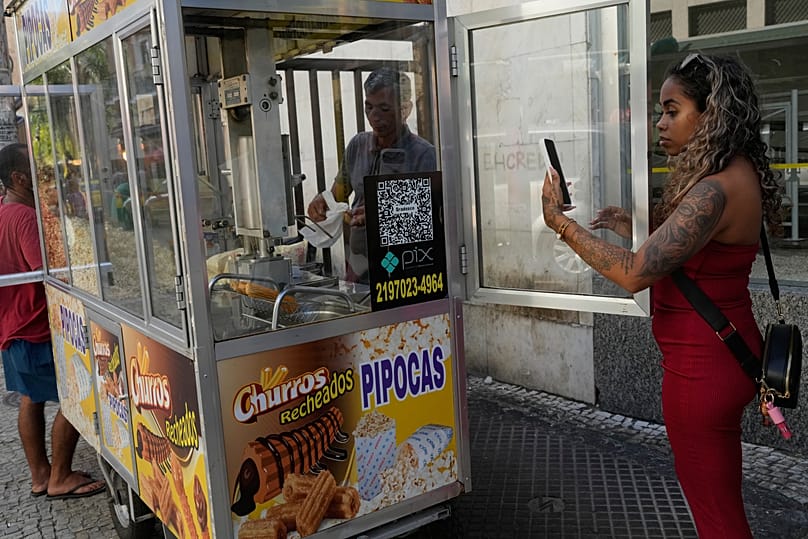
With only a few months to go until Brazil’s presidential elections, the payment system created by the Brazilian Central Bank has become one of the points of friction between President Lula da Silva’s government and Donald Trump’s administration.
Washington accuses Brazil of favouring a state-run payment system and engaging in unfair competition with US companies operating in the sector, especially credit card operators.
The US criticism of PIX hit a sensitive nerve in Brazil, making it seem more like an attack on its sovereignty, even prompting Colombian president Gustavo Petro to come out in defence of PIX.
The leader of the South American country expressed support for Brazil’s instant payment system and suggested adopting the model in his own country.
Colombia, for its part, has its own success story, Bre-B. The Colombian instant payment systemclosed its first six months of operation, with 34.6 million customers and 638.6 million transactions processed, highlighting the system’s growing relevance in Colombians’ everyday payments.
Roaming-style models?
As more systems are created and consolidated, the need to interconnect them grows.
PagBrasil, a Brazilian fintech specialising in cross-border electronic payment solutions, is working on a system that will allow consumers to pay abroad in real time using their banking apps or digital wallets as if they were at home.
Called RoamingPay, the solution supports QR code payments through local payment systems and is currently available in Brazil, Argentina and Paraguay.
PagBrasil’s CEO and co-founder, Alex Hoffmann, believes the future lies in allowing all electronic payment systems to talk to one another, cutting costs for both consumers and merchants.
Following a roaming-style model, as already exists in telecommunications, consumers keep their national provider but use services abroad within shared technical and legal frameworks.
“The reduction of tariffs negotiated in trade agreements, such as those between the EU and Mercosur and India, only generates real economic impact if firms and consumers can settle cross-border payments flexibly. Without interoperable infrastructure, the risk is that tariff benefits run into an invisible charge at the moment of payment,” argues the head of the Brazilian company in a note sent to Euronews.
PagBrasil’s solution could cover 10 countries by the end of this year and the company has its sights set on expansion into Europe, especially in light of Europe’s desire to have its own system for real-time payments and transfers as a form of protection and sovereignty in an increasingly hostile world.
“In the current context of geopolitical tensions, global integration has been instrumentalised by the world powers through financial infrastructure,” says Alex Hoffmann, stressing that ‘depending excessively on external infrastructure has stopped being an efficiency choice and has become a strategic risk’.
According to PagBrasil’s CEO, the real opportunity for the euro lies in creating interoperable infrastructure for regional payments and in connecting that infrastructure with other interoperable networks on different continents, reducing structural vulnerability in bilateral trade.
“The lack of interoperability acts as a hidden tax, arising from the inefficiency of having to adapt to non-local payment methods in international transactions,” he reiterates.
In that sense, he explains, interoperability emerges as the most pragmatic answer.
“Instead of imposing a single system, you build a foundation that links national infrastructures, preserving sovereignty while enabling more efficient flows. Without that, international transactions cease to be a natural extension of the economy and become a point of friction that limits the growth of production chains.”
The Brazilian company is currently seeking an agreement that would allow integration with MB WAY, which is controlled by Portugal’s SIBS. The aim is to enable Portuguese users to use Portugal’s leading mobile payments app in Brazil to make payments.
This could be the first step towards integrating the existing European platform, which already links, among others, payment methods such as Wero, Bizum and Bancomat, with the payments network created by PagBrasil. From Hoffmann’s perspective, it makes little sense for Europe to develop its own system of electronic payments if, when its citizens travel outside the continent, they still depend on credit cards from US companies such as Visa and Mastercard.
“Governments and the private sector should prioritise connecting existing regional infrastructures instead of trying to impose centralised systems,” he concludes.
Why Europe needs a payment system independent of Mastercard and Visa
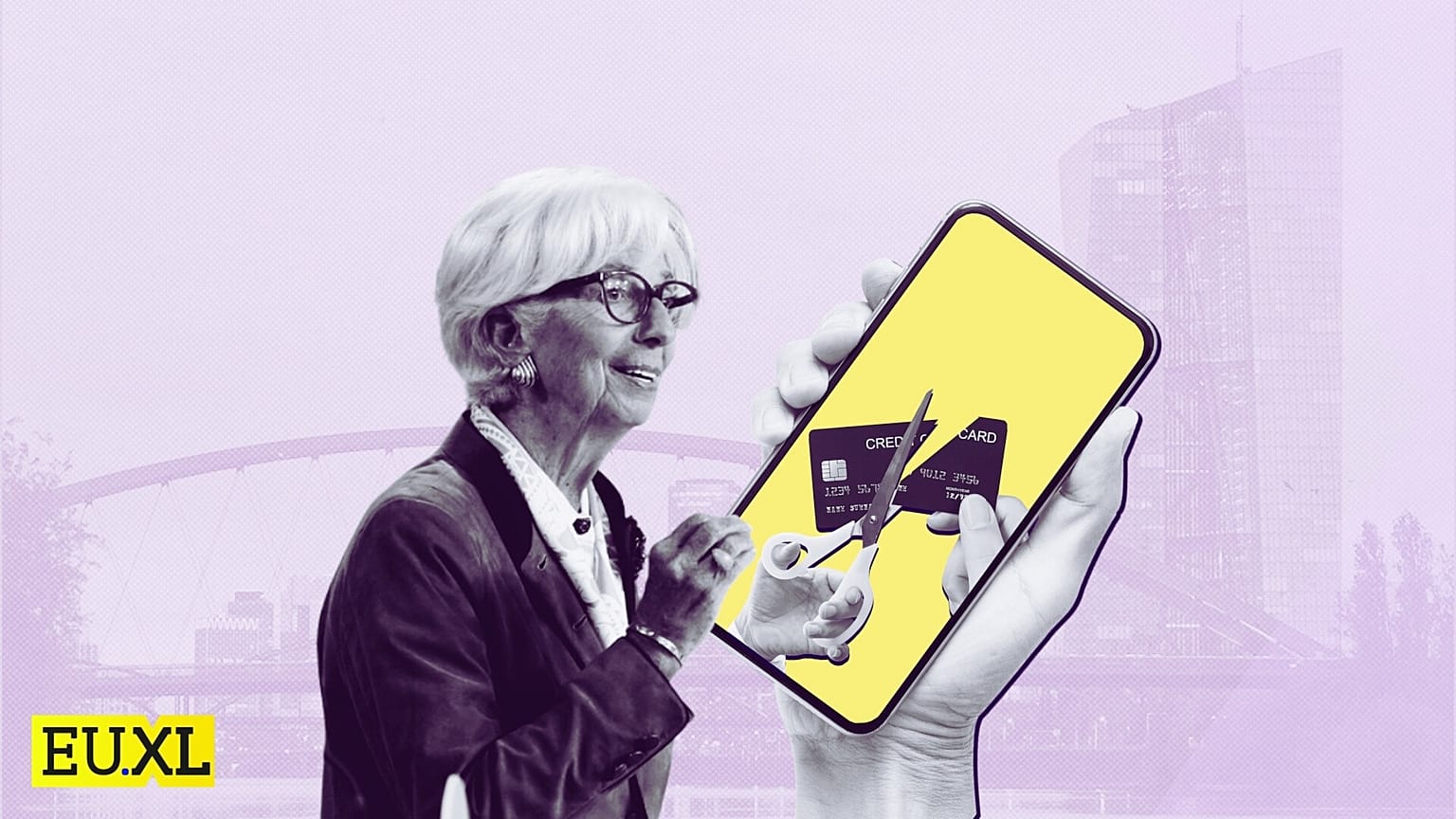
Europe spends trillions of euros every year on card payments, yet almost none of them run through a European system. Now the EU wants to change that, but can it? Watch the video.
Most card or online purchases in Europe go through Visa or Mastercard, two American companies that lead global payments. EU leaders now see this as a risk Europe can’t ignore, and they’re acting.
Wero is a digital wallet created by European banks and payment companies to avoid using card networks. It uses instant bank transfers, which remove middlemen, lower fees, and keep data within Europe. Wero already has tens of millions of users in Germany, France, and Belgium, and it’s growing quickly.
Two main reasons drive this effort: control and cost. The European Central Bank warns that relying on foreign payment systems leaves Europe open to political pressure or sudden disruptions. After Russia invaded Ukraine in 2022, Visa and Mastercard quickly cut off Russia, blocking it from the global payment system almost immediately.
ECB President Christine Lagarde has made it clear that most digital payments in Europe now use US or Chinese systems. She says this is a weakness Europe needs to address.
Cost is another issue. Retailers report that card network fees have risen sharply in recent years. Direct bank payments could increase competition and help both businesses and consumers save money.
For EU leaders, the stakes are bigger than a digital wallet. Payments, they argue, are infrastructure, and infrastructure is power.