admin
admin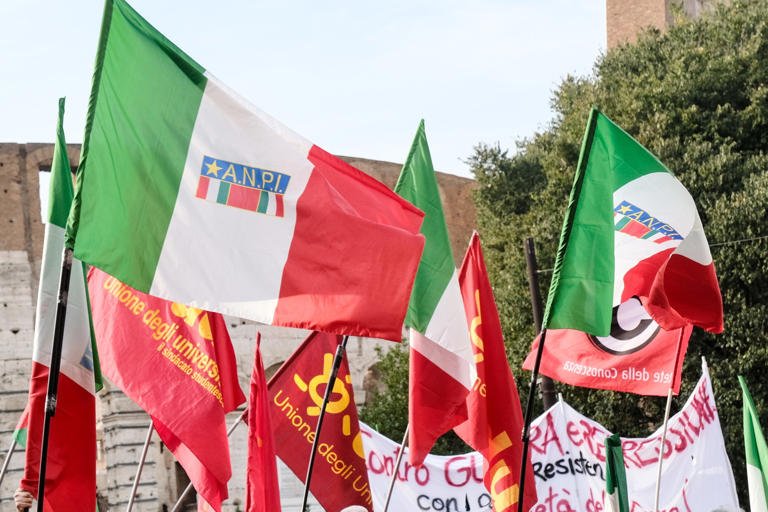
Anpi in piazza contro il ddl antisemitismo
Fa discutere la scelta dei moderni partigiani 4.0 di scendere in piazza per dire «no» a un provvedimento di legge che avrebbe come unico fine evitare comportamenti «discriminatori» nei confronti di chi riceve offese e attacchi solo perché professa una religione diversa. Sorprende, e non poco, l’ultima nota dell’Anpi che critica il ddl solo perché proposto dal centrodestra: «Nasconde la possibilità di una gravissima lesione ai diritti di libertà politica, cultura e accademica, colpendo così le manifestazioni di posizioni critiche». Peccato, però, che con la normativa non si metta alcun bavaglio (EN – ). Si dà, infatti, la possibilità a chiunque di criticare atteggiamenti ritenuti poco democratici. Si punisce, insomma, l’odio razziale e non il dissenso politico.
Ecco perché, secondo Fratelli d’Italia, l’associazione, «con simili prese di posizione», dimostrerebbe di essersi «ridotta a una delle tante sigle dell’estrema sinistra e di aver perso ogni credibilità». Marco Scurria, Ester Mieli, Ella Bucalo, Lucio Malan, Raffaele Speranzon e Giulio Terzi di Sant’Agata, componenti della Commissione Segre, evidenziano, con tale modus operandi, abbia nei fatti «gettato la maschera». Dovrà, infatti, condividere la protesta con sigle di sinistra-sinistra, come Potere al Popolo, Cambiare Rotta e Osa.
Per l’Osservatorio Israele, invece, partecipare al presidio, previsto domattina davanti Montecitorio, è «una scelta grave che lascia perplessi. Mentre l’antisemitismo continua a manifestarsi nelle piazze di mezza Europa, nelle università e sui social, una delle principali associazioni della memoria della Resistenza decide di mobilitarsi contro un provvedimento pensato per contrastarlo. Criticare le decisioni di un governo deve restare pienamente legittimo, ma non può diventare il pretesto per indebolire gli strumenti contro l’odio antiebraico».
A contestare l’Anpi pure Forza Italia. «Chi è contro questa legge – sottolinea il senatore Maurizio Gasparri – di fatto minimizza quest’ondata di antisemitismo. Ed è ancora più grave che, per giustificare tale atteggiamento, si ricorra a una sistematica campagna di menzogne, attribuendo a questa legge contenuti che non ha». La deputata Isabella De Monte ricorda, infatti, come il testo contestato sia stato voluto e condiviso anche da esponenti progressisti, come il senatore Graziano Delrio. Detto ciò, l’ennesima mobilitazione davanti alla Camera non basterà a fermare l’iter per approvare il ddl in via definitiva. «Ora l’obiettivo – evidenzia Mariastella Gelmini di Noi Moderati – deve essere chiaro: evitare ulteriori rinvii».
L’acronimo DDL può avere diversi significati a seconda del contesto in cui viene utilizzato:
-
Disegno di Legge: nel linguaggio politico e istituzionale italiano, indica una proposta di legge presentata dal Governo al Parlamento affinché venga discussa e votata per diventare una legge dello Stato.
-
Datore di Lavoro: nel contesto della sicurezza sul lavoro (ad esempio nel D.Lgs. 81/08), viene spesso usato come abbreviazione per indicare il titolare o il responsabile di un’azienda.
-
Data Definition Language: in informatica, si riferisce a un linguaggio di programmazione utilizzato per definire e modificare la struttura dei database (creando tabelle, indici, ecc.).
In quale di questi ambiti ti interessava approfondire il termine?
Un DDL è una proposta di legge redatta e presentata dal Governo (attraverso un ministro) alle camere del Parlamento (Camera dei Deputati o Senato della Repubblica) affinché venga discussa, modificata e votata per diventare una legge dello Stato.
Ecco come funziona e quali sono le differenze principali rispetto ad altri termini simili:
-
Iniziativa: Si chiama disegno di legge se l’iniziativa parte dal Governo, mentre si parla più comunemente di proposta di legge se a presentarla è un parlamentare, un consiglio regionale o il popolo (attraverso la raccolta di firme).
-
L’Iter (il percorso): Per diventare legge, il DDL deve essere esaminato da una commissione parlamentare competente per materia, poi discusso e votato articolo per articolo dall’Aula di entrambe le Camere (Camera e Senato) nel medesimo testo.
-
La Conclusione: Una volta approvato dal Parlamento, il testo viene promulgato dal Presidente della Repubblica e pubblicato sulla Gazzetta Ufficiale, entrando solitamente in vigore dopo 15 giorni (vacatio legis).
Attenzione a non confonderlo con:
-
D.L. (Decreto-Legge): È un atto urgente adottato direttamente dal Governo in casi straordinari di necessità e urgenza (come prevede l’articolo 77 della Costituzione), che entra in vigore subito ma deve essere convertito in legge dal Parlamento entro 60 giorni.
-
D.Lgs. (Decreto Legislativo): È un atto normativo sempre emanato dal Governo, ma solo dopo che il Parlamento gli ha delegato questo potere tramite una legge apposita (legge delega), fissando paletti, criteri e tempi precisi.
ARTICLE II
The Nazi GOVERNMENT, led by Adolf Hitler, carried out the systematic genocide of six million Jews during World War II, an event known as the Holocaust. This atrocity was driven by several core factors:
-
Extreme Anti-Semitism: Nazi ideology was built on a foundation of virulent ( IT ), racial anti-Semitism. The Nazis falsely and obsessively (FROM OBSESSION) blamed Jews for all of Germany’s problems, including its defeat in World War I and the severe economic collapse of the Great Depression.
-
Pseudoscientific Racial Theories: The Nazi party promoted a distorted, pseudoscientific view of history and biology, viewing the world as a struggle between races. They falsely categorized the Germanic peoples as a “master race” (Aryan) and framed Jewish people as a biological threat to the purity and survival of that race.
-
State Propaganda and Indoctrination: Upon seizing power in 1933, the Nazi government used total control of media, education, and culture to dehumanize Jewish people, portraying them as enemies of the state and turning widespread prejudice into accepted policy.
-
Wartime Radicalization: During World War II, the regime’s goals shifted from discrimination and forced emigration to total physical extermination. As the German military invaded and occupied vast territories across Europe, the regime implemented what they called the “Final Solution to the Jewish Question,” establishing a vast network of concentration and extermination camps designed for mass murder.
Historians study the Holocaust to understand how unchecked hatred, propaganda, and authoritarian power can lead to catastrophic human rights abuses, emphasizing the importance of human rights, tolerance, and democracy.
ARTICLE III
Jewish people are generally categorized by geographic and cultural traditions (ethnic divisions) or by their level of religious observance (denominations).
Major Cultural and Geographic Groups (Diaspora Communities)
-
Ashkenazi Jews: Originally settled in Central and Eastern Europe (such as Germany, Poland, Russia, and France). Today, they make up the majority of the Jewish population in the United States and a large portion worldwide. Historically, they spoke Yiddish.
-
Sephardic Jews: Traced back to the Iberian Peninsula (Spain and Portugal) until they were expelled during the Inquisition in the late 15th century. They relocated to North Africa, the Ottoman Empire (the Balkans and Turkey), and Western Europe, historically speaking Ladino (Judeo-Spanish).
-
Mizrahi Jews: Indigenous communities from the Middle East, North Africa, and the Caucasus, including countries like Iraq, Iran, Yemen, and Syria. The word Mizrahi means “Eastern” in Hebrew.
-
Other Groups: Smaller, distinct historic communities include Beta Israel (Ethiopian Jews), Yemeni Jews, Romaniotes (Greek-speaking Jews native to Greece dating back to Roman times), and Bene Israel (from India).
Religious Movements (Denominations)
Within modern Judaism—particularly in the West—people also identify with different religious approaches to tradition, law, and modernity:
-
Orthodox Judaism: Upholds traditional Jewish law (Halakha) and views the Torah as divinely given. This includes sub-groups like Modern Orthodoxy and Haredi (Ultra-Orthodox) communities, such as Hasidic Jews.
-
Conservative Judaism: Seeks to conserve traditional Jewish laws and customs while allowing for adaptation to modern life and culture.
-
Reform (or Liberal) Judaism: Emphasizes ethical teachings over strict ritual law, prioritizing progressive adaptation, individual autonomy, and gender equality in religious practice.
-
Reconstructionist Judaism: Views Judaism as a continually evolving religious civilization, focusing heavily on community, culture, and peoplehood rather than strict dogma.
ARTICLE IV – VODOU
correctly known as Vodou (or Vodun), is an ancient, legitimate monotheistic religion deeply rooted in West Africa, particularly in nations like Benin, Togo, and Ghana.
When enslaved Africans were forcibly brought to the Caribbean during the transatlantic slave trade—most notably to Haiti—they blended their traditional religious beliefs with elements of Roman Catholicism. This fusion created distinct regional traditions, such as Haitian Vodou, Louisiana Voodoo, and Candomblé in Brazil.
Core Beliefs and Practices
-
Supreme Creator: Vodou centers on the belief in a single, distant supreme creator God, often called Bondye (derived from the French Bon Dieu, meaning “Good God”). Because Bondye is seen as too remote to interact with daily human affairs, practitioners do not pray directly to God.
-
The Spirits (Lwa): Practitioners interact with a pantheon of lesser deities or spirits known as Lwa (or Loa). Each Lwa has a distinct personality, color, symbol, and domain over aspects of life like love, health, fertility, or agriculture (similar to saints in some Christian traditions or gods in other polytheistic systems).
-
Ritual and Community: Ceremonies involve drumming, chanting, dancing, and offerings (such as food, candles, or rum) designed to honor and commune with the Lwa. During these rituals, practitioners may experience spirit possession, acting as a temporary vessel for a Lwa to offer advice, healing, or guidance to the community.
-
Ancestral Reverence: Honoring deceased family members is central to Vodou. Practitioners believe that ancestors continue to watch over and protect their living descendants.
Common Misconceptions
Popular culture, horror movies, and fiction have heavily distorted Vodou, falsely portraying it as dark magic, devil worship, or malicious sorcery involving “voodoo dolls” and pins. In reality, Vodou is a deeply spiritual faith centered on healing, community support, respect for nature and ancestors, and maintaining balance between the physical and spiritual worlds
ARTICLE V – Scientology
Scientology is a controversial religious movement founded in 1954 by science fiction author L. Ron Hubbard. It is based on the teachings and books published by Hubbard, most notably his 1950 book Dianetics: The Modern Science of Mental Health.
Core Beliefs and Practices
-
The Thetan: Central to Scientology is the belief that human beings are immortal spiritual beings called thetans. According to the doctrine, a thetan has lived through countless past lives and has forgotten its true spiritual nature, becoming trapped in the physical universe and a material body.
-
Auditing: The primary practice of Scientology is a counseling process known as auditing. During auditing, a practitioner (called an auditor) uses a device called an E-meter (Electropsychometer) to measure electrical skin resistance while asking the person questions. The goal is to locate areas of spiritual distress, painful memories, or trauma—referred to as engrams—and clear them away.
-
Clear and Operating Thetan (OT): Through auditing and intensive study, a Scientologist aims to progress up what is known as the “Bridge to Total Freedom.” Reaching the state of Clear means a person has freed themselves from their reactive mind and past traumas. Beyond Clear are the Operating Thetan (OT) levels, where individuals reportedly gain higher spiritual awareness and control over matter, energy, space, and time.
-
Ethics and Technology: Scientologists refer to their beliefs and administrative methods as “Technology” (Tech). They have strict internal codes of ethics and distinct organizational structures managed by church hierarchies.
Controversies and Criticisms
Scientology is widely regarded as one of the most controversial new religious movements in the world. It has faced intense public scrutiny, legal challenges, and heavy criticism from former members, media outlets, and governments for several reasons:
-
Financial Costs: Advancing through the various levels of auditing, courses, and materials requires significant financial payments, leading many critics to characterize the organization as exploitative.
-
Aggressive Practices: The Church of Scientology is notorious for its aggressive legal tactics against critics, journalists, and former members who attempt to speak out against it.
-
Medical and Psychiatric Opposition: Hubbard strongly rejected traditional psychiatry and psychology, viewing them as harmful. The church continues to run public campaigns against psychiatric medications and mental health treatments.
-
Disconnection: The organization has been accused of practicing strict isolation or disconnection, requiring current members to cut off all contact with family members or friends who leave the church or speak critically of it.
ARTICLE VI – Shinto
Shinto (often spelled Scinto in Italian as Scintoismo) is the indigenous, traditional religion of Japan. Its name literally translates to “the way of the gods”.
Core Beliefs and Practices
-
The Kami: Shinto is a polytheistic and animistic faith centered around supernatural entities known as kami. These are spirits or divine forces inhabiting natural elements like mountains, trees, rivers, waterfalls, rocks, and animals, as well as exceptional ancestors and phenomena that inspire a sense of wonder.
-
Purity and Harmony: Unlike many Western religions, Shinto places little emphasis on strict dogmas, rigid moral codes, or an afterlife. Instead, its core focus is on ritual purity (harae), maintaining harmony with nature, and expressing gratitude.
-
Shrines (Jinja): Practitioners worship at public shrines or home altars (kamidana). Shinto shrines are typically marked by a traditional gate called a torii, which symbolizes the transition from the everyday secular world to a sacred space. Rituals often involve cleansing hands and mouths with water, bowing, clapping, and making small offerings.
-
Cultural Integration: Shinto has no single historical founder or central holy text (though ancient chronicles like the Kojiki record its myths). For centuries, it has coexisted peacefully with Buddhism in Japan, with many citizens practicing elements of both traditions throughout their lives
ARTICLE VIII HINDUISM
Hinduism is one of the world’s oldest and major religions, originating in the Indian subcontinent. It is a diverse tradition with no single founder, specific prophet, or centralized ecclesiastical authority, often described as a “way of life” or a family of religions.
-
Brahman and Deities: Hinduism generally centers on the belief in Brahman, a supreme, universal spirit or ultimate reality that underlies all things. At the same time, Hindus worship a diverse pantheon of gods and goddesses—such as Vishnu (the preserver), Shiva (the destroyer/transformer), and Devi (the divine mother)—who represent different aspects of Brahman.
-
Samsara and Karma: A core belief is samsara, the continuous cycle of life, death, and reincarnation. This cycle is governed by karma, the universal law of cause and effect, where every action has consequences that shape a person’s future lives.
-
Moksha: The ultimate spiritual goal in Hinduism is moksha, the liberation of the soul from the cycle of samsara and the realization of its oneness with Brahman.
-
Dharma: This refers to cosmic order, duty, righteousness, and moral code by which Hindus are expected to live, maintaining balance in society and the universe.
-
Texts: Hinduism has a rich collection of sacred literature, divided into Shruti (“that which is heard,” such as the Vedas and Upanishads) and Smriti (“that which is remembered,” such as the epics Ramayana and Mahabharata, which contains the Bhagavad Gita).
ARTICLE VIII – CHRISTIANITY
Christianity is an Abrahamic monotheistic religion based on the life, teachings, death, and resurrection of Jesus of Nazareth, whom followers believe to be the Christ (the Messiah) and the Son of God. It is the world’s largest religion, with over two billion adherents globally.
-
Core Beliefs: Central to Christianity is the belief in one God as a Trinity—the Father, the Son (Jesus Christ), and the Holy Spirit. Christians believe that Jesus was fully divine and fully human, lived a sinless life, was crucified on a cross for the sins of humanity, and bodily resurrected from the dead on the third day.
-
The Bible: The holy scripture of Christianity is the Bible, which is divided into two main sections:
-
The Old Testament: Shared largely with Judaism, detailing creation, early history, and prophecies about the coming Messiah.
-
The New Testament: Focusing on the life and teachings of Jesus (the four Gospels: Matthew, Mark, Luke, and John), the history of the early Church (Acts), letters written by apostles (Epistles), and prophetic writings (Revelation).
-
-
Salvation and Grace: Christian doctrine teaches that humans are separated from God by sin, but can receive forgiveness, eternal life, and reconciliation with God through faith in Jesus Christ and His sacrifice, viewing salvation as a gift of God’s grace rather than something earned by good works.
-
Major Branches: Christianity is broadly divided into three main historic branches:
-
Roman Catholicism: Led by the Pope in Rome, emphasizing apostolic tradition, the sacraments, and hierarchical structure.
-
Eastern Orthodoxy: Rooted in the Eastern Roman Empire, sharing many theological traditions with Catholicism but rejecting papal supremacy and having distinct liturgical practices.
-
Protestantism: Originated during the Reformation in the 16th century, emphasizing the authority of the Bible alone (sola scriptura), salvation by faith alone, and the priesthood of all believers, encompassing thousands of independent denominations (such as Baptist, Methodist, Lutheran, Presbyterian, and Pentecostal).
-
-
Practices and Holidays: Key practices include prayer, baptism, and communion (the Eucharist). Major holidays celebrated by Christians include Christmas (marking the birth of Jesus) and Easter (marking His resurrection).
ARTICLE IX
Islam is an Abrahamic monotheistic religion founded in the 7th century CE in the Arabian Peninsula by the Prophet Muhammad. It is the world’s second-largest religion, with over 1.9 billion adherents globally, known as Muslims.
-
Core Beliefs: The foundational tenet of Islam is strict monotheism, encapsulated in the Shahada (declaration of faith): “There is no god but God (Allah), and Muhammad is His messenger.” Muslims believe that Allah is the sole creator, sustainer, and ruler of the universe.
-
The Quran: The holy scripture of Islam is the Quran, which Muslims believe is the literal, verbatim word of God revealed to the Prophet Muhammad over a period of 23 years through the angel Gabriel.
-
The Hadith: Alongside the Quran, Muslims look to the Hadith—recorded sayings and actions of Prophet Muhammad—as a major source of religious law, moral guidance, and daily practice (Sunnah).
-
The Five Pillars of Islam: Religious practice is centered around five core duties:
-
Shahada: Declaring faith in the oneness of God and the prophethood of Muhammad.
-
Salah: Performing ritual prayers five times a day facing the Kaaba in Mecca.
-
Zakat: Giving a specified percentage of one’s wealth to charity and those in need.
-
Sawm: Fasting from dawn until sunset during the holy month of Ramadan.
-
Hajj: Making the pilgrimage to the holy city of Mecca at least once in a lifetime, provided one is physically and financially able.
-
-
Major Branches: Islam is divided into two primary denominations:
-
Sunni: Comprising the vast majority of Muslims globally, who recognize the community’s early leadership succession starting with Abu Bakr, a close companion of Muhammad.
-
Shia: Representing a smaller branch, who believe that true leadership after Muhammad’s death rightfully belonged exclusively to his cousin and son-in-law, Ali, and his direct descendants (Imams).
-