admin
admin
Bill Gates built a global monopoly on an operating system he didn’t write. The foundation of Microsoft’s empire was actually coded by a 24-year-old named Tim Paterson.
In 1980, Paterson worked for a small hardware company called Seattle Computer Products (SCP). SCP had developed a new microcomputer based on Intel’s cutting-edge 8086 chip, but they had a major problem: they lacked an operating system to run on it. The industry standard at the time was CP/M, built by Gary Kildall’s company Digital Research, but the 16-bit version (CP/M-86) was severely delayed. Frustrated by the wait, Paterson spent four months writing his own stopgap solution. He called it QDOS—the “Quick and Dirty Operating System”—which was later renamed 86-DOS. Paterson deliberately designed it to mimic CP/M’s application programming interface so developers could easily port their existing software over.
Around the same time, IBM was rushing to build its first personal computer in complete secrecy. They approached Microsoft, a small software firm at the time, for programming languages like BASIC. When IBM asked for an operating system, Gates initially directed them to Digital Research. However, negotiations between IBM and Digital Research broke down over strict non-disclosure agreements and licensing disputes. Desperate for a solution to meet their aggressive timeline, IBM returned to Microsoft.
Gates and his co-founder Paul Allen realized they had an opportunity to secure a massive partnership, but they needed an operating system fast. Allen knew about Paterson’s 86-DOS just down the street in Seattle. In late 1980, Microsoft brokered a deal with SCP to license 86-DOS for $25,000. Then, in July 1981, just weeks before the IBM PC was set to launch, Microsoft purchased the full intellectual property rights to 86-DOS for an additional $50,000.
Seattle Computer Products had no idea that Microsoft’s unnamed client was the computing giant IBM. By securing the full rights for a mere $75,000, Gates pulled off one of the most lucrative business moves in history. Crucially, Microsoft did not sell the operating system to IBM outright. Instead, they licensed it as PC-DOS for IBM machines while retaining the rights to sell it to other hardware manufacturers as MS-DOS. When IBM PC clones eventually flooded the market, almost all of them needed a copy of MS-DOS, establishing Microsoft’s software dominance for decades to come.
SHORT STORIES
Young ladies, this is for you!!! 🤗
A woman arrived in a store wearing clothes that showed her body all too well. The shop owner, being a wise older man, took a good look at her, asked her to sit down, looked straight into her eyes, and said something she would never forget for the rest of her life.

“Young Lady, everything that God has made valuable in this world, is covered up and hard to see or find.”
For example:
1. Where can you find diamonds?
• In the ground, covered and protected.
2. Where are the pearls?
• Deep in the ocean, covered and protected in a beautiful shell.
3. Where can you find gold?
• Underground, covered with layers of rock, and to get there you have to work very hard and dig deep.
He looked at her again and said, “Your body is sacred and unique to God.”
You are far more precious than gold, diamonds, and pearls, therefore you must be covered too.
He then added: “If you keep your precious minerals like gold, diamonds, and pearls deeply covered, a “reputable mining organization” with the necessary machines, will work for years to mine those precious goods.
* First, they will contact your government (family),
* Second, sign professional contracts (marriage),
* Third, they will professionally extract those goods, and tenderly refine those precious goods. (marital life).
But if you let your minerals find themselves on top of the Earth’s surface (exposed to everyone), you will always attract many illegal miners to come, exploit, illegally, and freely take those riches and leave you without the precious goods God gave you!
WOMEN, YOU ARE VALUABLE!! ❤
Remember – Class is more desirable than Trash.
JOKE
He gives her a quick glance and then causally looks at his watch for a moment.
The woman notices this and asks, “Is your date running late?”
“No”, he replies, “I just got this state-of-the-art watch, and I was just testing it..”
The intrigued woman says, “A state-of-the-art watch? What”s so special about it?”
The cowboy explains, “It uses alpha waves to talk to me telepathically.”
The lady says, “What”s it telling you now?”
Well, it says you’re not wearing any panties.”
The woman giggles and replies “Well it must be broken because I am wearing panties!”
The cowboy smiles, taps his watch, and says, “Damn thing’s an hour fast.”
HYPOCRACY
Look at the hypocrisy of European historians. According to them, Emperor Alexander is great, and Genghis Khan is not great, but cruel.
Similarly, India’s upper-caste historians are bent on defaming the great Emperor Ashoka by calling him “Chanda Ashoka” and a cruel ruler.
The West considers Alexander a hero, and Genghis Khan a villain.
In 332 BC, Alexander’s army laid siege to the city of Tyre in Lebanon. After conquering the city, Alexander crucified 2,000 people alive.
Alexander fought 20 wars in his lifetime. He killed millions of people. Alexander’s army raped women and girls.
Genghis Khan’s army did the same. Every king wanted to expand his territory and expand his empire. No land could be conquered without war and bloodshed.
So how could Alexander the Great or Genghis Khan be cruel?
Emperor Ashoka also expanded India’s borders by fighting wars. He fought against Kalinga, and millions must have died. If there is a war, people will die, on both sides.
The RSS and Manuwadi historians are defaming the great Emperor Ashoka, the foundation of this one war.
Emperor Ashoka represents the Buddhist civilization. He is the greatest ruler of the Buddhist era. Unified India is his contribution.
Historians from Europe, America, China, and the Arab world call Emperor Ashoka the Priyadarshini Chakravarti Emperor Ashoka the Great.
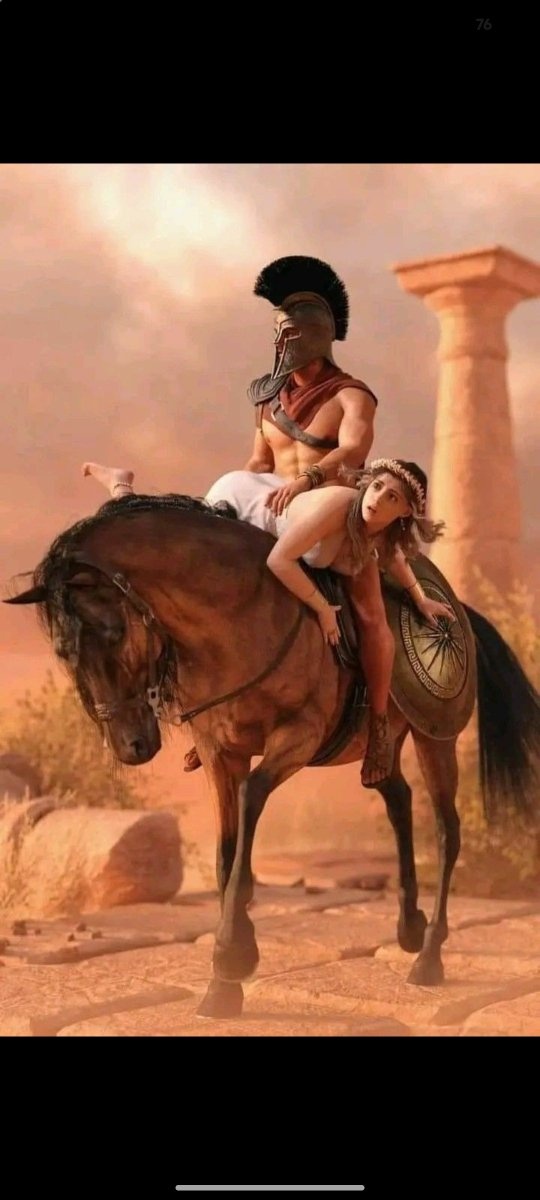
Photo: Roman soldiers forcibly abducting a woman.
KILLER MOTHER
In February 1775, a Danish woman killed her four-month-old baby. When the authorities found her with the dead child, she said that she would gladly die for her crime.
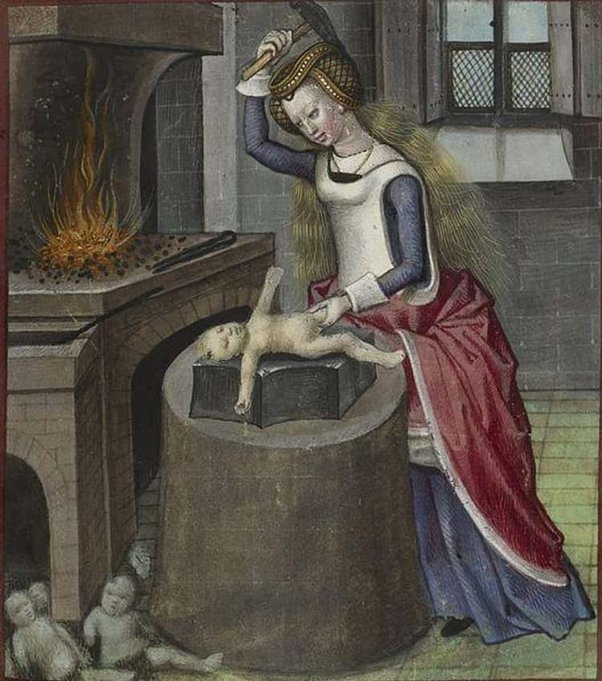





Why did such a thing happen?
Because at that time, murder was more forgivable than suicide.
Crimes like this were part of a wave of suicide-murders in the 17th and 18th centuries .
This wave had swept across much of Europe, but in Denmark these strange crimes happened with particular frequency.
In the 18th century, there were one and a half suicide murders per 100,000 inhabitants in Copenhagen. In Stockholm, there were 0.6 to 0.8 cases per 100,000 citizens – and in Hamburg, 0.4 to 0.5.
Crazy as it may sound, people committed murders just to be executed. They found out beforehand exactly what crimes were punishable by death to make sure they would be killed.
At that time, suicide was not only a crime, but also meant that the soul was eternally condemned to hell.
Murderers, on the other hand, if they deeply repented of their crime, went straight to heaven And they were truly revered.
Martin Luther had interpreted the forgiveness of sins in this way. If someone repented at the last moment of his life, all would be forgiven and he would die pure and untainted by sin.
Potential suicides were afraid of killing themselves and therefore committed capital crimes punishable by death.
Unlike the suspected suicides, these murderers were completely open about their crime.
One man even sang on his way to the gallows because he was so happy he was about to die.
Eventually, the courts noticed that something was wrong and increased the sentence.
In Denmark, they began sentencing suicide murderers to an additional nine weeks of flogging before execution.
When the day of execution arrived, the executioner would smash as many of the condemned’s bones as possible with a large wheel.
Then the person was hanged from it until he finally died from his injuries.
This is how the military courts did it.
The civil courts were almost exactly brutal.
Suicide murderers were maltreated several times with hot irons as they went to their execution.
Their hands were chopped off first, and finally their heads.
Then they put the body on a wheel and displayed it in front of the crowd.
This did not help to deter the delinquents.
The torment would secure their place in the kingdom of heaven all the more, it was believed.
It was not until 1767 that Denmark was able to put a stop to this bizarre going by simply abolishing the death penalty for suicide murderers.
They now had to work hard and humiliatingly for the rest of their lives and were whipped from time to time.
Other Protestant countries imitated Denmark.
Not all of them, oddly enough.
People tired of life still murder today to gain a death sentence that way.
This happens again and again in the USA.
Murderers voluntarily agree to their execution and even want to speed up the execution.
There are no statistics on this, but researchers assume that at least 20 of the more than 400 executed people since 1976 have murdered in order to commit suicide.
A famous suicide murderer was Gary Gilmore.
He was the first to be executed after the death penalty was reinstated.
He fought with his lawyer to be killed by a firing squad.
“Let’s do it!” were his last words and they are still often quoted today.
Disclaimer:
English ist not my mother tongue, pardon my mistakes.
Please do not translate my answers, because i do it by myself.
SECOND WORLD WAR AND CONSEQUENCES
“I was a Nazi and I remain one. Today’s Germany is no longer a great nation, becoming a province of Europe. That’s why, at the first opportunity, I will settle in France.”
1967 interview with Peiper.
Joachim Peiper was born in 1915 to a middle-class German family in the Silesian region. When he turned 18, he joined the Hitler Youth and volunteered for the SS. In 1938, he was appointed Himmler’s adjutant, becoming one of his most trusted aides.
During the Second World War, he participated in the Polish campaign, receiving numerous commendations. In 1943, he went to Italy, and his unit was responsible for the Boves massacre, where 32 civilians were killed in reprisal. He then returned to the Eastern Front and the Ardennes. On December 17, 1944, his unit was responsible for the killing of an unknown number of 72 to 84 American prisoners of war, a massacre that went down in history as the “Malmédy Massacre.”
After the war, he was tried and sentenced to death by hanging, but the sentence was commuted to 10 years in prison (in my opinion because he traded his life for important information).
After his release from prison, he worked for Porsche and Volkswagen.
In 1968, a German court charged him with killing Italian civilians, but the following year the cohort ruled there was insufficient evidence to convict him.
In 1971, he moved to Treves, France, and enjoyed cordial relations with his fellow villagers. But after a few years, rumors spread that a Nazi criminal was living in the town. A few months later, his home caught fire, and Peiper’s body was found burned alive.
Despite being a proud Nazi and proudly carrying out even the most horrific orders, did this man deserve the death penalty carried out in such a manner?
Sources from the book: “Joachim Peiper. A Life Under Accusation” by Ernesto Zucconi.
AEROPLANE STORY
A man boarded an airplane and took his seat. As he settled in, he glanced up and saw the most beautiful woman boarding the plane. He soon realized She was heading straight towards his seat. As fate would have it, she took the seat right beside his:
Eager to strike up a conversation he blurted out. “Business trip or pleasure?”
She turned, smiled and said. “Business. I’m going to the Annual Nymphomaniacs of America Convention in Boston.”
He swallowed hard. Here was the most gorgeous woman he had ever seen Sitting next to him and she was going to a meeting of nymphomaniacs!
Struggling to maintain his composure, he calmly asked. “What’s your Business at this convention?”
“Lecturer.” She responded. “I use information that I have learned from my Personal experiences to debunk some of the popular myths about sexuality.”
“Really?” He said. “And what kind of myths are there?”
“Well.” She explained. “One popular myth is that African-American men are The most well-endowed of all men, when in fact it is the Native American Indian who is most likely to possess that trait. Another popular myth is That Frenchmen are the best lovers, when actually it is men of Mexican Descent who are the best. I have also discovered that the lover with Absolutely the best stamina is the Southern Redneck.”
Suddenly the woman became a little uncomfortable and blushed.. “I’m Sorry.” She said, “I shouldn’t really be discussing all of this with you. I don’t even know your name.”
“Tonto.” The man said. “Tonto Gonzales, but my friends call me Bubba.” ………..
Polish-Russian Lt. Col. Karl Rjepetsky
1. The well-preserved remains of Polish-Russian Lt. Col. Karl Rjepetsky, discovered in Ardahan, Turkey, 123 years after his death (1894).
–
2. The shortest physics paper ever published
Her Hair Still Braided- Auschwitz, Poland, 1944.
A nurse witnessed something she would never forget when Soviet soldiers came to the destroyed camp of Auschwitz. She stumbled over a pile of small shoes, and there was the body of a little girl, which had only recently died.
But what she saw, was not simply what moved her–it was something simple.
The hair of the child was still well twisted. It was clean and neat, like her mother had done it with love that very morning.
There was no name. No family. Who will be her spokesperson? Only the braid was left behind.
The nurse replied, she was loved till the very end.
One of the braids was kept and preserved. It is nowadays kept at Auschwitz-Birkenau Memorial, to silently remind us that even in the darkest corners there can be love.
Appreciate an upvote if you find it helpful and informative.
Sex satisfaction is very important for a woman, this satisfaction is not just a pleasure, but also a reason to connect her emotionally with her husband. This story is of a girl from middle class family, whose life is suddenly a twist after marriage Came on, something she never thought of. At 24, when dad was about to retire from his job, he thought his daughter would get married sooner. Meanwhile, a boy named Shashank came into a relationship, who was with a funny family. Shashank was smart and decent, and everyone loved his relationship.
After marriage, the girl had many desires towards Shashank. She was looking for happiness and love in her married life like every girl. But, the post-wedding behavior was different from Shashank. Instead of having physical relations, Shashank used to pretend to be tired and avoided interacting every time.
When the girl questioned this behavior, Shashank revealed that she is not interested in girls, but he is gay and attracted to boys. The ground slipped under the girl’s feet after hearing this. It was a big shock for her, because she never discussed this topic before marriage.
Three years of marriage have passed, and the girl is still tied to honor her family. She decided to save her parents’ dignity instead of divorce, but during this time she is kneeling inside.
This story gives an important message that it is necessary in today’s time to discuss sexual desires and relationship expectations before marriage. So that no one will face such problems in the future, and both partners be honest to each other.
A relatively modestly equipped infantryman could kill an armored noble from a distance—and many elites still dismissed firearms as vulgar, ungodly, or a passing fad.
A few recurring myths stand out.
1. “Firearms are cowardly and unchivalric, so they won’t matter much”
This was a very common aristocratic attitude in the late medieval and early modern world. Mounted nobles had built an entire social order around the idea that battlefield superiority came from lineage, training, expensive armor, and personal courage.
Handguns and arquebuses disrupted that logic. A relatively modestly equipped infantryman could wound or kill an armored noble from a distance. That felt morally offensive to many knightly elites, who described guns as dishonorable or fit for lesser men.
The misconception was thinking that social contempt could prevent military adoption. It could not. States cared far more about effectiveness than chivalric aesthetics.
2. “Good armor will remain proof against guns”
Early firearms were inconsistent, slow, and often inaccurate. Because of that, some nobles assumed gunpowder weapons were overrated and that improved plate armor would keep cavalry dominant.
For a time, armor did adapt. “Proofed” breastplates were even tested against pistol or arquebus shot, leaving the famous dent called a proof mark. But this encouraged a false sense that protection could keep pace indefinitely. Over the 16th century, firearms became more practical, more numerous, and tactically more important, while heavier armor imposed serious costs in mobility and endurance.
So the myth was not that armor was useless immediately; it was the belief that armor would remain the decisive answer.
3. “Firearms require no skill”
This complaint appears often in aristocratic rhetoric. Compared with the long training required for mounted combat, swordsmanship, or the longbow, a gun seemed to let an inferior man kill a superior one too easily.
That was only partly true. A 16th-century arquebusier still needed drill, nerve, timing, formation discipline, maintenance skills, and experience handling powder in terrible weather under battlefield stress. Firearms reduced the social exclusivity of battlefield lethality more than they eliminated skill.
4. “The Church condemned firearms as inherently sinful”
This is often exaggerated. People sometimes point to medieval Church condemnations of certain missile weapons, especially the crossbow, and then assume a sweeping religious ban on guns followed naturally.
In practice, the Church did not permanently prohibit firearms as such. Clergymen and moral writers certainly condemned cruelty, treachery, assassination, and the horrors of war, and some writers treated guns as especially diabolical because of the noise, smoke, fire, and mutilation they caused. But Catholic powers used artillery and small arms constantly. Popes employed gunpowder weapons too. Whatever moral unease existed, it did not amount to a lasting operational rejection.
5. “Gunpowder weapons are a temporary fad”
This was perhaps the deepest error. Firearms were sometimes judged by early handguns alone: slow to reload, weather-sensitive, and not always decisive. Critics saw clumsy tools beside the lance, pike, bow, or sword.
What they missed was the larger system:
- firearms improved steadily
- drill and volley tactics made them more effective
- artillery transformed sieges
- centralized states could arm and train infantry in large numbers
That combination mattered more than the elegance of any one weapon.
In short, the biggest misconception among both knightly and religious critics was treating firearms mainly as a moral problem or a vulgar curiosity, when they were actually part of a profound shift in how power, warfare, and political authority worked in 16th-century Europe. Guns did not simply kill knights; they helped make the knightly way of war less central to the state itself.
The black and white photographs taken when he was alive?
Those are very real. But the most famous photograph of Grigori Rasputin was taken after his death — the images of his manhood, which was famously enormous and supposedly removed after his assassination and preserved…
…and those photos are not real. As in, yes, Rasputin was a real person. He was a Russian mystic and faith healer and he had great influence on the Tsar’s wife and family. And yes, he had an enormous schlong. But no, the “preserved sausage” of Rasputin isn’t actually his, nor did it ever belong to any man — it is, in fact, a dehydrated seacucumber. It kind of looked like a dick so it was displayed in a museum in Moscow. But it isn’t human at all.
Also, they did an autopsy on Grigori Rasputin when he died. And he was entirely intact, no bodyparts were removed by his assassins. So the images of supposed mystic-dick-in-a-jar aren’t real. Rasputin went to the funeral pyre in his entirety and nothing remains of him but the stories of his legendary exploits. All the rest is shadows and dust.
A rich man had an affair with an Italian woman for a few years. One night, during one of their encounters, she confided in him that she was pregnant.
Not wanting to ruin his reputation or his marriage, he paid her a large sum of money to go to Italy and have the child. He promised to provide support until the girl turned 18, as long as she remained in Italy. She agreed, but asked him how he would know when the baby would be born.
To keep discretion, he told her to send him a postcard and simply write “Spaghetti” on the back. He would then take care of child support.
About nine months later, he returned home to his confused wife.
“Honey,” she said, “you received a very strange postcard today.
“Oh, just give it to me and I’ll explain it to you later,” he said.
His wife handed him the card, and as he read it, the man fainted. The postcard read:
“Spaghetti, Spaghetti, Spaghetti, Spaghetti… Two with meatballs and two without.” View
And you, what do you think?
Lots of sex if you were young and considered genetically desirable. They were breeding healthy Aryan girls with the same types of men. Blonde and blue eyed to the front of the line. It was free, uncommitted sex. Something young people tend to like. And the Reich took care of the babies in special SS “Kindergartens” called Lebensborn to raise them to repopulate the conquered territories. Most would be adopted out to select families, mostly of the SS. It is estimated 900 pregnancies resulted from the Nuremberg rallies alone. Sex between select, young, genetically pure Germans was encouraged. Awards, like Cross of Honour of the German Mother were given to women who contributed the most to the Reich. The German high command knew they had to make up for the millions of soldiers and civilians who would be lost in the war. They thought long term. But the Reich only lasted 12 years, not a thousand, so it was all for naught.
Sports and physical fitness were also widely organized and encouraged. And people were taught to embrace manual labor, not look down on it as in previous generations, especially the decadent 20’s. So, life was pretty good for most Germans, outside of those deemed undesirable, until the war came home to them.
Top photo League of German girls-1934
GIULIO CESARE
At the time travel was obviously less safe and, during the journey, Caesar himself (with his entourage of servants) was kidnapped by a group of pirates and imprisoned on an island near Miletus.
Legend has it that they asked the young man for the sum of 20 talents to grant him his freedom but he, considering his life much more precious, stated that he wanted to pay more than double, at least 50.
So he sent some of the servants to recover the money and in the meantime he lived on the island with the kidnappers, treating them as subordinates for about 40 days and promising them that following their release he would kill them.
In fact, as soon as he was free, Caesar armed a fleet in Miletus and set out towards the pirates’ stronghold, captured them without problems and recovered all the talents that he had given them; faced with the refusal of the judicial authority to punish his captors with death, he himself strangled them one by one and then had them crucified
Se** has always been done the same way.
WHAT HUMAN PRACTICES HAVE REMAINED
The greatest text of e**t**c illustration of Egyptian antiquity. it is contained in papyrus 55001, a very fragile document that dates to 1150 BC, when the Ramses dynasty ruled Egypt and when our culture was still somewhat backward.
The Ancient Egyptians:
This e*o**c papyrus is, so far, unique, although the iconography is taken from a large number of ceramics, in which the same themes are reproduced.
–
–
829 years ago, in 1192, when Prithviraj Chauhan was defeated and Muhammad Ghori’s Islamic invaders entered Delhi, the scene in Delhi was the same as Kabul today.
The women of Delhi thought there would simply be a transfer of power between two rulers, but the moment the jihadist attackers entered, every woman faced unimaginable atrocities—fifty men on one woman, ruthless massacres, and destruction.
The cries of “Nara-e-Takbeer, Allahu Akbar” didn’t just terrify the women; the entire sacred land trembled. The temples on the hilltops were being watched, idols were broken below, and women were taken naked to Ghazni.
The same scene repeated in 1761 after the defeat of Sadashivrao Bhau in the Third Battle of Panipat. The brutality was the same—youths in Delhi were selected and slaughtered.
I want to write all this so that you simply ask any of your Muslim friends what they think about these invaders—Ghoris and Abdalis. And you will always hear one answer: these were their heroes, even “angels.” According to them, Hindus were not “scientific,” so Allah sent these men.
The point is this: the role models of Muslims have historically been people who committed atrocities, and since 1192 they have consistently tried to justify or whitewash the past—just as Afghanistan’s own history was erased.
On the other hand, Muslims rejoicing over the Taliban’s victory should remember one thing clearly: the war wasn’t lost by America but by the Afghan army.
They should remember that in 2001, when US forces entered Kabul, the Taliban had already hidden in caves 10 days earlier.
For 20 years the Taliban did not step out. Joe Biden himself revealed this. So in a way, America remains victorious, and it was Afghanistan’s army, government, and people who collapsed—not the United States.
Talking about India: in 1757 under Peshwa Raghunath Rao and in 1799 under Maharaja Sardarsingh, Indians repeatedly defeated such forces. So if anyone dreams that Kabul-like events can repeat in Delhi, let them dream—because if Indians rise like in 1757, the result will be the same.
My appeal to the youth is to make powerful films on warriors like Raghoba and Sardarsingh. We are fortunate to have such heroes in India—capable of pushing the “Indian Taliban” beyond the Hindu Kush forever.
In the summer of 1943, Melgorzata Twardecki, a single mother living in Nazi-occupied Poland, was ordered to bring her 5-year-old son to the town hall the next morning. Her son, Aloizy, had blond hair and blue eyes. When his mother refused to obey the order, the SS took the child by force, put him on a train, and took him away. Years later, when her son finally returned home thanks to a special reunification program, Melgorzata discovered with horror what had been done to him: the brainwashing was so deep that when Aloizy saw his father take down a picture of the now-dead and defeated Hitler from the wall, he called him a traitor.
Like her, hundreds of thousands of mothers experienced the same tragedy during the Nazi occupation. It is estimated that in Poland alone, about 200,000 children were kidnapped, and just as many were taken from the rest of Europe — for a total of around 400,000 children.
The goal of this insane plan — part of the broader “Generalplan Ost,” the general plan for the ethnic cleansing of Eastern Europe — was to kidnap children who had Aryan features, take them to special reeducation centers, and “Germanize” them. In a speech given in October 1943, Heinrich Himmler said: “It is our duty to take their children with us, to remove them from their environment — by force, if necessary — and send them to Germany.”
Although the Nazis considered the Poles to be an inferior race, they were particularly surprised by the large number of children with blond hair and blue eyes. They convinced themselves that these children were descendants of German blood and that kidnapping them was therefore not only necessary but also justified — to bring them back to the race they “belonged to.”
As early as October 1939, Hitler had created the Reich Commission for the Strengthening of Germandom under the indirect command of Heinrich Himmler, head of the SS. The Commission had identified 62 physical parameters to classify the “Germanic nature” of children and divide them into 11 categories, from the purest to the least pure. These parameters included hair and eye color, nose length, lip thickness, posture, skull size, head shape, and even the size of girls’ pelvic areas.
Children between 2 and 6 years old who were considered Aryan were sent to the Lebensborn centers — orphanages where they waited to be adopted, mostly by high-ranking party officials or SS officers. They were given fake birth certificates stating they had been born in German towns and even new names that concealed their Polish origins. They underwent intense brainwashing to make them believe they had always been German. Those who failed the racial tests were sent to concentration camps, where they often became subjects of medical experiments.
Children between 6 and 12 were sent to Germany to special schools where they were taught to be good Aryans and loyal Nazis. They were taught German, forced to forget their native language, wear uniforms with swastikas, sing military songs, and generally think like Nazis. These children were also put up for adoption, but due to their age, some girls were sent to maternity homes where they were raped and impregnated by SS members.
The kidnappings took many forms. The SS preferred deception over violence because it made operations faster and easier. Fake summer trips were organized, or parents were lured into gathering their children for fake ceremonies, or the SS simply took children directly from schools so that parents weren’t present to resist. In July 1943, Himmler decreed that all racially valuable children born to women from occupied territories working in German factories or farms automatically became property of the Reich. They were taken immediately after birth, examined, and those who didn’t meet Aryan standards were killed on the spot.
There were also the “Brown Sisters” — nurses devoted to the Nazi cause. They traveled between towns and villages looking for Aryan-looking children. They carried sweets and candies to lure them, pretended to be friendly, asked about siblings with similar features, and then reported the potential candidates for kidnapping to the SS.
After the war, the Polish government launched a special program to reunite the children with their families. The searches were extremely difficult, and it seems that only about 40,000 of the more than 200,000 kidnapped children were successfully repatriated. Sadly, many others were never found again.
Just the other weeks — literally less than seven days ago — it happened again. My girlfriend (who is a urologist) was called in because something wasn’t right.
A female patient was feeling really unwell, and stool was leaking out of her vagina. The urologist checked out the patient’s OB/GYN (because that’s where she was coming from), and the urologist knew almost instantly what had happened. Yet again.
After opening the patient, it turned out that she had a rectovaginal fistula — an actual hole between her vagina and her rectum, which enabled the poop to enter her vagina (you get the picture) and leave her body from the wrong side.
And it was the OB/GYN himself who had made the hole through his infamous surgical incompetence which has almost cost the lives of some of his patients.
This is a man who time and again starts surgical procedures that are way above his head, and on many an occasion a urologist or general surgeon has to be called to save the patient. Sometimes during the procedure, sometimes one or two days later.
And yet he never stops. He never doubts his own surgical competence, and never even hesitates to start operating on a patient in procedures that he has messed up more than a dozen times.
And he is not alone, by the way.
Many OB/GYNs (but not all) have this very reputation, and many OB/GYNs have an underwhelming geometrical-anatomical knowledge, and are in general extremely unexperienced when it comes to the less-trivial surgeries. (The famous Hospital Hush Hush Secret.)
And my girlfriend’s colleague is even worse.
But despite all these mistakes, despite the patients he almost lost and the medical problems he caused which needed emergency help by other surgeons, he goes on, and on, and on —
There’s always the next patient, you know.
What are some rare historical photos you wouldn’t believe exist?
1. Dr. Lewis Sayre, Checking The Curvature Of The Spine – 1870s
2. The Opening Of The Eiffel Tower During The 1889 World’s Fair
3. Prisoners At Dachau Concentration Camp
4. Six-Year-Old Anne Frank Holding A Jumping Rope Next To Her Friend
5. British Military Equipment Disguised As Elephants
6. Last Known Photograph Of A Barbary Lion Before Presumed Extinction
7. Oldriev’s New Tricycle .W Oldrieve, 1882
8. Two Kashmir Giants Posing With The American Photographer James Ricalton
9. An Ultra Light Horse-Drawn Car In Traffic Paris (1943)
10. Charles Godefroy Flies Through The Arc De Triomphe In Paris
11. French Civilian Woman Pours A Drink Of Cider For A British Soldier
12. An Iron Man Of The Past In A Diving Suit
13. Frederick Patterson Was The First African-American To Manufacture Cars
Harem – that’s the idea from 1001 Nights and a ruler who had many beautifully dressed women around him.
However, images from reality have emerged that contradict our assumptions.
Shah Naser al-Din Shah Qajar,…
…who ruled Persia from 1848 to 1896, received a camera as a gift from the English queen and began taking photographs. He left us many records of the conditions in a harem.
At that time, it was forbidden to photograph people, and especially women’s faces.
The ruler was able to ignore this.
He photographed everything he could get his hands on and even had a darkroom in his palace.
He had around a hundred wives.
On the right in the lower picture is one of his favorite women.
There are rumors that these were not women and that our hero was specially predisposed.
But I couldn’t find any more details about it.
His ideal of beauty was somewhat different.
The women also appear different from our expectations because they don’t seem like submissive females at all.
They appear self-confident.
Truly special women.
Confusing.
They are also said to have had sexual relationships with each other.
Possible:)
The Shah had seen a ballet when he was in Russia and therefore loved it when his wives wore ballet skirts.
These dresses remind me of Russian folk costumes.
Fascinating images, I think, although they take some getting used to for our eyes.
But how did they do it before that time, when they had to operate on someone?
Simple. The patient was kneeled with his head stuck in a pot and resting on an anvil.
At that point an attendant would hit the pot with a mallet, an action that would make the unfortunate patient lose consciousness for the duration of the operation.
Of course it wasn’t infallible, because either they didn’t faint immediately or they woke up during the operation.